Single Core vs Multi Core: Which Is Better? (Complete Guide)
Every aspect of our lives has been changed by the rapid evolution of electrical and electronic systems, and this has led to a change in how we use cables and conductors. It doesn’t matter if it’s the wiring of a house, the machinery of an industry, or a piece of electronics; the right type of cable must be chosen for good performance, long life, and safety. To a great extent, the decision comes down to whether to use single core or multi core wires, as both of them have their respective strengths and areas of application.
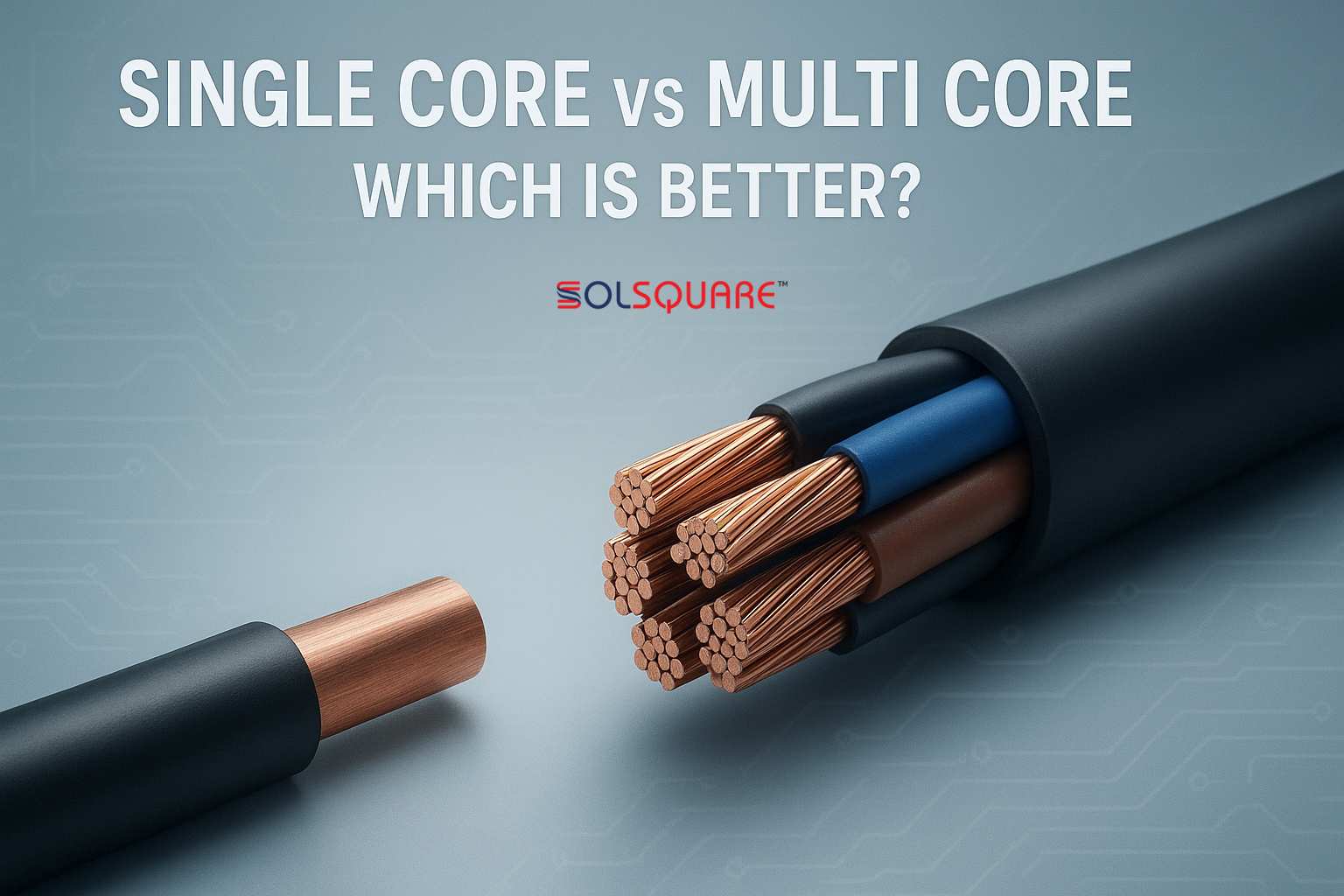
The question which is often asked is: Which is better-single core or multi core?
We analyze their differences, benefits, drawbacks, uses, and everything else you need to know to make the right decision in this detailed manual.
What Is Single Core Wire?
A single core wire is a conductor made of a single, solid strand of metal—usually copper or aluminum—covered with insulation. It is simple, durable, and ideal for fixed installations.
Key Characteristics
- One solid conductor
- Higher mechanical strength
- Used for long, straight runs
- Lower flexibility
- Simple structure with fewer chances of breakage
What Is Multi Core Wire?
A multi core wire consists of two or more insulated copper conductors bundled inside one outer sheath. These wires are flexible and ideal for equipment that requires frequent movement.
Key Characteristics
- Multiple insulated conductors inside a single cable
- High flexibility
- Supports signal, power, or both simultaneously
- Complex structure
- Common in electronics, appliances, instruments, and machinery
Key Differences: Single Core vs Multi Core
| Feature | Single Core | Multi Core |
|---|---|---|
| Flexibility | Low | High |
| Durability (fixed installations) | Very high | Moderate |
| Current carrying capacity | Higher (for same gauge) | Slightly lower |
| Cable size | Thinner | Bulkier |
| Cost | Lower | Higher |
| Applications | Home wiring, power distribution | Electronics, instruments, machinery |
| Ease of bending | Difficult | Easy |
| Heat dissipation | Better | Comparatively lower |
Advantages of Single Core Wire
- Higher Current-Carrying Capacity
- Better Heat Dissipation
- Mechanical Strength
- Lower Cost
- Ideal for Long Distance Wiring
Advantages of Multi Core Wire
- Flexibility
- Easy Handling
- Supports Mixed Signals
- Safer and Cleaner Installations
- Vibration Resistant
Disadvantages of Each
Single Core
- Not suitable for applications requiring bending
- Difficult to install in complex wiring routes
- Cannot carry multiple signals
Multi Core
- More expensive
- Slightly lower current capacity
- More complex to manufacture and repair
Which Is Better: Single Core or Multi Core?
The real answer is: It depends on your application.
Choose Single Core If:
- You need long-distance power transmission
- Wiring is fixed and not subject to movement
- Higher current is required
- You want better durability in a stable environment
Choose Multi Core If:
- Flexibility is important
- Equipment involves frequent motion
- You need to carry multiple signals
- You want neat and compact wiring
Expert Summary
For home wiring → Single core is generally preferred
For industrial machines → Multi core is ideal
For portable devices → Multi core is a must
For high-load circuits → Single core often performs better
Real-World Applications
Single Core Applications
- Residential electrical wiring
- Building power distribution
- Grounding cables
- High-current industrial installations
Multi Core Applications
- Control panels
- Machinery with moving parts
- Automotive wiring
- Communication systems
- Home appliances
Which Is Safer?
Both are safe when used in appropriate conditions. However:
Single core is safer for long-term fixed installations.
Multi core is safer for moving or flexible environments because it resists breakage during repeated bending.
FAQs
Conclusion
Single core and multi core wires are both necessary for the functioning of electrical systems, however, one cannot be considered as a “better” type in general. The decision of which one to use should be based only on the purpose of your work.
Single core is the right option if you require a strong, durable cable that can carry a high power load.
Multi core is the right option if you require a flexible cable, multiple conductors, and a space-saving way of routing.
If a person can distinguish between those different types of cables, then, that person can safely, correctly, and faster execute any electrical project. It means that by just choosing the appropriate one you not only ensure the system to be safe and stable but you also extend the operating life of your installation.